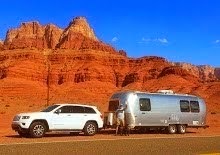
Now, what are the chances we'd end up in the same park, nose to nose with each other??? If we'd been 2 sites away, we never would have seen each other!!!
The end of the story: We enjoyed a wonderful visit with Mary and Dick, went to breakfast at a charming restaurant, The Olde Chickahominy House, and then we departed for our next stop and they remained to visit the sites we had already seen. There's a theory that RVers are a community albeit a moving one. I think it's true...
 The Historic Triangle is comprised of Williamsburg , Yorktown, and Jamestown. It's made up of 5 sites to visit: the Village of Williamsburg, and both National Park Service sites and living history sites at Yorktown and Jamestown.
Jamestown was the first English settlement in the New World. One hundred and four men and boys settled on James Island on the James River in 1607 - 13 years before the Pilgrms arrived in Plymouth. Though they suffered very hard times, the settlement endured through the Revoluntary War and the implementation of the Constitution and the Bill of Rights.
The first Africans arrived about 1619. They were prisoners of war from Angola. They arrived as indentured servants, but by mid-century is was common to have slaves for life.
The living history complex at Jamestown has three areas to visit - the fort, the Powhatan indian village, and the ships. There's also a museum that covers its 200 years of history. This is inside the fort. Reconstructed buildings and working craftsmen depict all aspects of life in the settlement.
 They learned about tobacco as a cash crop about 1613. This storehouse has it hanging from the rafters.
 I spoke with this tailor. He was handstitching a new jacket. Though people are in costume, they do not take on particular characters. All are knowledgeable and can talk about life in Jamestown.
 The ships on the dock are all open for touring. I asked about the largest one, the Susan Constant, as compared to the Mayflower. It's about 30% smaller. Consider that it took 4 months to cross, most of it spent in the belly of the ship. The smaller ships, Godspeed and Discovery, carried only about 12 - 15 passengers.
 We spoke with some of the park interpreters in the Powhatan Village. Relations with the indians were mostly good. The settlers learned from them and traded with them.
My new fact: Pocahontas was never married to John Smith. They knew each other, but she was married to John Rolfe, moved to England and died there a short time later. She was used as a public relations tool for the colony..
 The National Park Service offers Historic Jamestown on the original site of the settlement. There's an archelogical dig on the site of the fort, a church tower, and a museum detailing the finds and the work being done there.
 The National Park Service offers Historic Jamestown on the original site of the settlement. There's an archelogical dig on the site of the fort, a church tower, and a museum detailing the finds and the work being done there.
 Yorktown Battlefield is the exact spot where we gave up colony status to become a nation! Here is where Cornwallis surrendered to Washington's combined American and French army after a 6 year battle. There's a museum in the visitors center.
The park ranger walked us around the battlefield and described the victory and the events leading up to it. He lectured for more than an hour and never lost even one member of his group. He was wonderful! He brought it to life with descriptions of all sides of the event and the should-not-have-happened ending.
 This was a cannon battle - not anything like our visions of colonial fighting.
 The Yorktown Victory Center is another living history musem. A museum, a recreation of a continental army encampment...
 ...and a farm showing how people lived in the decade following the Revoluntary War. Ed enjoyed the musket firing.

 This was a cannon battle - not anything like our visions of colonial fighting.
 The Yorktown Victory Center is another living history musem. A museum, a recreation of a continental army encampment...
 ...and a farm showing how people lived in the decade following the Revoluntary War. Ed enjoyed the musket firing.
We got a good taste of modern medicine during the Revoluntionary War.
 And so on to Williamsburg. It's a mile long village with homes, shops, restaurants, reenactors and just about anything you can imagine to depict life in the capitol in the 18th Century. This is on the main street:
 Our first stop was in the Capitol Building. It's a reconstruction of the original on the footprint of the original. This is one of the courtrooms.
 The sights around Williamsburg are charming. It's a huge operation and they make it a lot of fun to be there. Anyone can walk the streets, but to enter the buildings you much have a badge - which you receive with a paid admission.
 The Palace was the home of the British Royal Governor in British America. People like Thomas Jefferson, George Washington, and Patrick Henry walked its halls. We took a guided tour of the house and the gardens.
 The main street of Colonial Williamsburg is the Duke of Glouster Street. It's about a mile long from the Capitol to the entrance of William and Mary College. There are also active side and backstreets.
 The Village is home to the DeWitt Wallace Decorative Arts Museum and the Abby Aldrich Folk Art Museum. We spent an entire day in the Village and returned two more times. Seeing the museums was stop number two.
 And so on to Williamsburg. It's a mile long village with homes, shops, restaurants, reenactors and just about anything you can imagine to depict life in the capitol in the 18th Century. This is on the main street:
 Our first stop was in the Capitol Building. It's a reconstruction of the original on the footprint of the original. This is one of the courtrooms.
 The sights around Williamsburg are charming. It's a huge operation and they make it a lot of fun to be there. Anyone can walk the streets, but to enter the buildings you much have a badge - which you receive with a paid admission.
 The Palace was the home of the British Royal Governor in British America. People like Thomas Jefferson, George Washington, and Patrick Henry walked its halls. We took a guided tour of the house and the gardens.
 The main street of Colonial Williamsburg is the Duke of Glouster Street. It's about a mile long from the Capitol to the entrance of William and Mary College. There are also active side and backstreets.
 The Village is home to the DeWitt Wallace Decorative Arts Museum and the Abby Aldrich Folk Art Museum. We spent an entire day in the Village and returned two more times. Seeing the museums was stop number two.
There are 5 examples of the Declaration of Independence.
 American pottery in the folk art museum:
 We both loved the creamware we saw in Williamsburg. There are reproductions being sold. These are original.
 Weathervanes in the folk art museum:
 This is a 400 year old quilt:
 Here's an example of one of the decorative arts galleries.
 Our 3rd trip to the Village was was see the reenactors. Here is General George Washington on the white horse meeting the residents of the Village outside the Capitol building. LaFayette was also in attendence. Washington acknowledged the hardships of life and asked for more from the people.
 He showed off his troops...
 ...and then asked for volunteers for the army. There was this one man in the first row...
 They were given sticks to use as guns and drilled in becoming soldiers.
 ...and then they were marched off down Duke of Gloucester Street led by the troops. General Washington looked so proud!
 I was really taken with the guy in the back row...
 We then attended a trial of a man who was accused of treason. The charges were unfounded but he pled guilty to another crime, and the court elected to make an example of him for the other soldiers and he was condemed to death. All in one trial.
 His wife ran into town and pled for mercy from General Washington who stated he was unfamiliar with the case but would review it. We never learned the result.
 The day ended with General Washington reviewing his troops and leading them and all the townsfolk in a parade.
 Williamsburg was lots of fun and very educational!
 American pottery in the folk art museum:
 We both loved the creamware we saw in Williamsburg. There are reproductions being sold. These are original.
 Weathervanes in the folk art museum:
 This is a 400 year old quilt:
 Here's an example of one of the decorative arts galleries.
 Our 3rd trip to the Village was was see the reenactors. Here is General George Washington on the white horse meeting the residents of the Village outside the Capitol building. LaFayette was also in attendence. Washington acknowledged the hardships of life and asked for more from the people.
 He showed off his troops...
 ...and then asked for volunteers for the army. There was this one man in the first row...
 They were given sticks to use as guns and drilled in becoming soldiers.
 ...and then they were marched off down Duke of Gloucester Street led by the troops. General Washington looked so proud!
 I was really taken with the guy in the back row...
 We then attended a trial of a man who was accused of treason. The charges were unfounded but he pled guilty to another crime, and the court elected to make an example of him for the other soldiers and he was condemed to death. All in one trial.
 His wife ran into town and pled for mercy from General Washington who stated he was unfamiliar with the case but would review it. We never learned the result.
 The day ended with General Washington reviewing his troops and leading them and all the townsfolk in a parade.
 Williamsburg was lots of fun and very educational!

 Posts
Posts


No comments:
Post a Comment