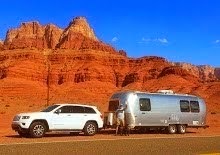
And so the pace of touring Boston continues.
Susan Russell came to spend a couple days with us. We planned to walk the Freedom Trail when we visited with her in the Berkshires...let's see...how long ago was that....? We took the subway into Boston and began our walk at North Station...that would bring us to Boston Common at the end. The placque in the sidewalk announces the Freedom Trail...
 And then you just follow this red brick path for 2 1/2 miles through the history of the city and it's role in the birth of our country.
 We arrived at Christ Church or the Old North Church after passing Copp's Burying Ground. The church's tall steeple is where the lanterns were hung the night of Paul Rever's ride to warn the people of the advancing British. One if by land, two if by sea. We learned that Revere would not have been calling, "The British are coming" because all the colonists were British. It might have been something like, "The redcoats are coming!"
 We walked through Revere Mall and looked at the placques dedicated to those who played an role in the Revolution.
 Ed really liked this statue of Paul Revere.
 Around the corner is the Revere house. This is where he lived when he made that famous ride to Lexington. He lived here with his first and second wives, and fathered 16 children!
  The North End is the Italian neighborhood of Boston. There are a million restaurants - all good we were told - and we stopped in one for a delicious lunch. The best part was the two men sitting at a corner table, speaking in Italian, of course. They looked and sounded like they could have come right out of the Sopranos. That little table eventually became the location of eight people, hugging, arguing, and eating heartily. The luncheon atmosphere was perfect! We stopped at a bakery and bought some Italian cookies for dessert. Then there was the pasta shop and the cheese shop... We LOVE ethnic neighborhoods! and this one was the BEST!
 Faneuil Hall was next. It has always been a marketplace on the first floor. The meeting hall on the second floor is where all sorts of protesting took place. Think: Boston Tea Party and "no taxation without representation." The statue in front is of Samuel Adams.
 The Old State House was the seat of British government and the first capitol under the first governor of Massachutes, John Hancock. Key events leading to the Revolution happened right in this building. The people in the street are standing on a large round disk that marks the site of the Boston Massacre in 1770.
 Here's the Old City Hall. It's a Ruth Chris Steakhouse today with a statue of Ben Franklin in the outdoor dining area. ???
  It's an odd feeling to be walking through all this history right where it all happened. And then we came to the Granary Burial Ground.
 It's the final resting place of Boston's most famous - Paul Revere, Samuel Adams, John Hancock, the victims of the Boston Massacre. Many of the markers are still in fine condition and we could read about the lives of the people.
 We ended the trail at Boston Common where we hopped on the red line train. It had taken us hours and we loved every minute of the walk.
 That's me, Maureen, Jeffrey, Ed, Lanie, and Rich.
 We climbed up into the tower to get this photo of the Village. Plimouth Plantation is a living history museum like none we have ever visited. It's made up of the English Village, where the year is 1627 - 7 years after the landing of the Mayflower; the Wampanoag Homesite, where the Native people offer a 21st century viewpoint; and the Crafts Center where modern-day artisans produce 17th century objects.
 In the Village, the Colonists are in costume and in character. They talk to you from the perspective of the person they represent and they answer any and all questions as they move around the Village doing what needs to be done - in 1627. This man is William Bradford, the first elected governor of the Village. He spoke with us about this unpaid position and the responsibilities it carries.
 We met William Bradford while "touring" this little cottage. He walked in, sat down, and spoke with us. In Plimouth it is proper to visit the inside of all the buildings, walk through the gardens, and ask questions.
 The residents are never too busy to stop and talk to you. Life is hard in Plimouth. The people are poor. No one wanted to return to England.
 The Wampanoag painted a less than rosy picture of the Colonists arrival. It was quite a contrast to the Colonists optimism. They spoke from a modern perspective while in native costume.
 We got into the Meyer's car and drove to the town of Plymouth to see the (replica) Mayflower.
 The ship is a museum and we were able to look into every nook and crannie. This is the cabin of the navigator.
 There are players here as in the Village. This woman was a passenger. She said she was there unpacking her belongings which included furniture and household items. And she had praise for the Captain for bringing them across safely. She described the conditions and said she stayed below the whole two months. She told us she wouldn't go to California because it was "800 miles to the West." She asked where I was from, I replied, "New Mexico." Her response: "Never heard of it!" I told her that was because I was from the future, and she quipped, "And I'm the Queen of England!" I LOVED her!! There is nothing you can do that will get these actors out of character!!
 It was a perfect day with the Meyers. We were able to meet up with them for dinner in a Greek restaurant a week later so we could hug our goodbyes and promise we would meet again...next time in the West.

 Posts
Posts


No comments:
Post a Comment